
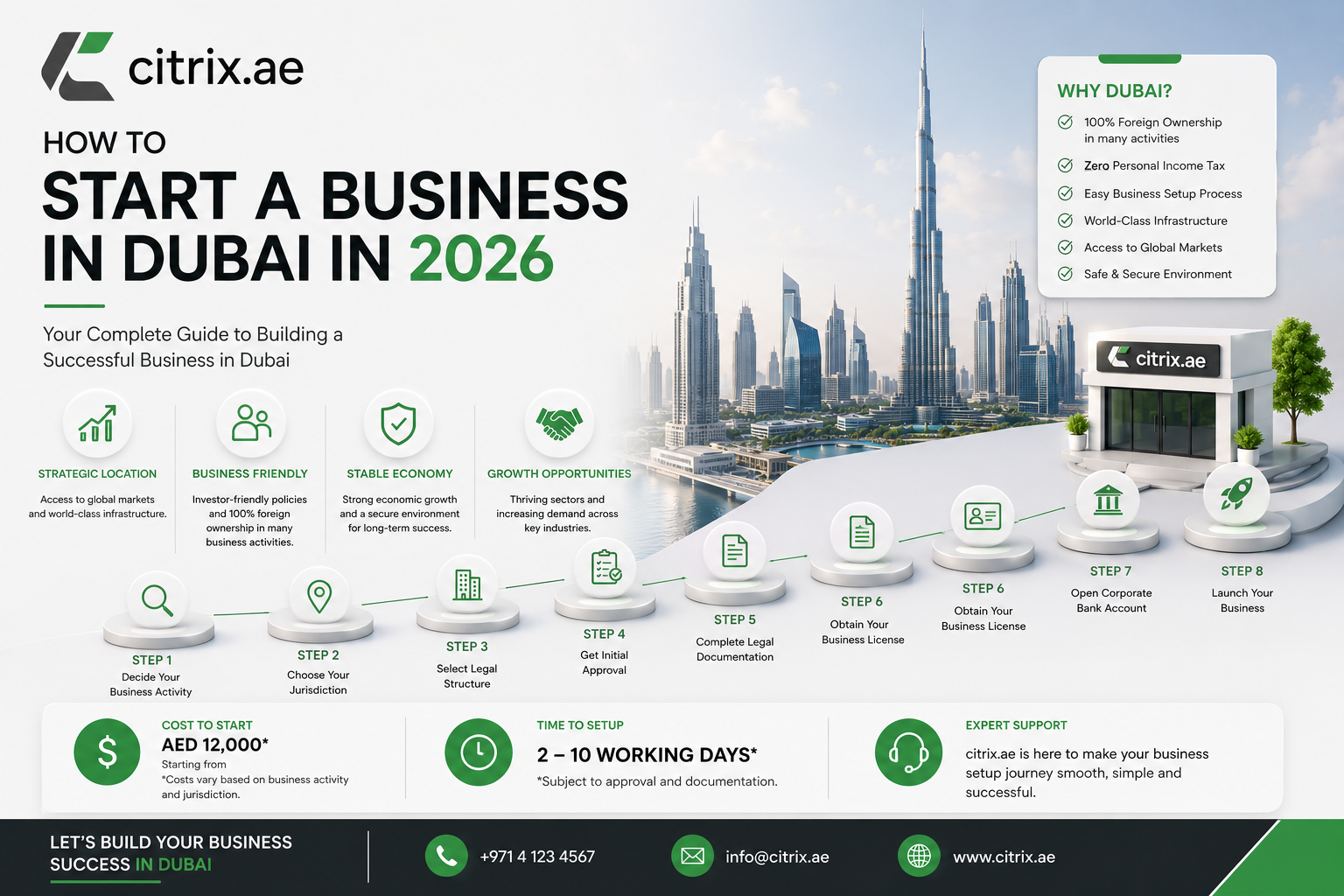
Learn how to start a business in Dubai in 2026. Discover business setup requirements, licensing options, costs, and step-by-step registration procedures.
How to Start a Business in Dubai in 2026
Dubai continues to be one of the world’s most attractive destinations for entrepreneurs, startups, and international investors. With its strategic location, business-friendly regulations, modern infrastructure, and tax advantages, the emirate offers significant opportunities for companies across various industries.
Whether you are launching a startup, expanding an existing business, or establishing a regional headquarters, understanding the business setup process is essential. This guide explains how to start a business in Dubai in 2026, including legal requirements, licensing options, costs, and key considerations.
Why Start a Business in Dubai?
Dubai has established itself as a global business hub connecting markets across the Middle East, Asia, Europe, and Africa. The city’s pro-business environment continues to attract entrepreneurs from around the world.
Key advantages include:
- Strategic international location
- World-class infrastructure
- Access to global markets
- Modern banking and financial services
- Business-friendly regulations
- Competitive tax environment
- Skilled and diverse workforce
- Strong economic growth prospects
These factors make Dubai an ideal location for businesses of all sizes.
Step 1: Determine Your Business Activity
The first step in starting a business in Dubai is identifying the type of activity your company will conduct.
Common business activities include:
- Trading and import/export
- Professional consulting
- Information technology services
- Marketing and advertising
- E-commerce
- Real estate services
- Manufacturing
- Tourism and hospitality
- Healthcare services
- Educational services
Your chosen activity will determine the licensing requirements and approvals needed from regulatory authorities.
Step 2: Choose a Business Jurisdiction
Entrepreneurs can generally choose between three main jurisdictions when setting up a company in Dubai.
Mainland Company
A mainland company allows businesses to operate throughout the UAE market and work directly with government and private sector clients.
Benefits include:
- Wider business opportunities
- Ability to trade across the UAE
- Access to government contracts
- Flexible office location options
Free Zone Company
Dubai’s free zones are popular among startups and international investors.
Advantages include:
- Streamlined setup process
- Full foreign ownership
- Industry-specific ecosystems
- Simplified administrative procedures
Many free zones cater to sectors such as technology, media, logistics, healthcare, and finance.
Offshore Company
Offshore structures are commonly used for international business activities, asset protection, and holding investments.
However, offshore entities generally cannot conduct business directly within the UAE market.
Step 3: Select a Legal Structure
The legal structure of your business impacts ownership, liability, and operational requirements.
Common structures include:
- Limited Liability Company (LLC)
- Sole Establishment
- Civil Company
- Branch Office
- Representative Office
- Free Zone Establishment (FZE)
- Free Zone Company (FZC)
Choosing the appropriate structure depends on your business objectives and ownership preferences.
Step 4: Reserve a Trade Name
Your business must have an approved trade name that complies with UAE naming regulations.
The trade name should:
- Be unique and available
- Reflect business activities where appropriate
- Avoid prohibited or offensive terms
- Comply with government naming guidelines
Once approved, the trade name is reserved for your company registration process.
Step 5: Apply for Initial Approval
Initial approval confirms that the relevant authorities have no objection to the proposed business activity and ownership structure.
This approval allows you to proceed with additional registration requirements and documentation.
Step 6: Secure Business Premises
Most businesses are required to have a registered office address.
Options may include:
- Physical office space
- Executive offices
- Co-working facilities
- Virtual office solutions (where permitted)
The office requirement varies depending on the jurisdiction and business activity.
Step 7: Obtain Your Business License
A business license is required before conducting operations in Dubai.
The most common license categories include:
Commercial License
For trading, import/export, retail, and general commercial activities.
Professional License
For service-based businesses such as consulting, marketing, legal services, and IT support.
Industrial License
For manufacturing and industrial operations.
Tourism License
For travel agencies, tour operators, and hospitality-related activities.
The license type depends on the nature of your business activities.
Step 8: Complete Registration and Documentation
Typical documentation requirements may include:
- Passport copies of shareholders
- Visa copies (if applicable)
- Passport-size photographs
- Trade name reservation certificate
- Initial approval certificate
- Business plan (for certain activities)
- Lease agreement or office documentation
Additional approvals may be required for regulated industries.
Step 9: Open a Corporate Bank Account
Once the company is licensed, businesses can apply for a corporate bank account.
Banks generally require:
- Company incorporation documents
- Business license
- Shareholder identification
- Business activity details
- Office lease documentation
Banking requirements vary depending on the institution and business model.
Step 10: Apply for Visas
Business owners, employees, and family members may be eligible for residency visas through the company.
Visa eligibility depends on:
- Business structure
- Office size
- Licensing authority regulations
- Immigration requirements
Proper planning ensures compliance with visa quotas and labor regulations.
How Much Does It Cost to Start a Business in Dubai?
Business setup costs vary depending on several factors:
- Jurisdiction selection
- License type
- Number of shareholders
- Office requirements
- Visa applications
- Government approvals
Potential expenses may include:
- Trade name reservation
- Initial approval fees
- License issuance fees
- Office rental costs
- Immigration fees
- Corporate banking setup expenses
Entrepreneurs should develop a realistic budget before beginning the registration process.
Common Challenges New Businesses Face
Although Dubai offers a supportive business environment, entrepreneurs should prepare for potential challenges such as:
- Choosing the correct license category
- Understanding regulatory requirements
- Managing setup costs
- Securing office space
- Navigating banking procedures
- Meeting compliance obligations
Working with experienced business setup consultants can help streamline the process and avoid costly delays.
Business Trends Shaping Dubai in 2026
Several sectors are expected to experience strong growth in 2026:
- Artificial Intelligence and Technology
- E-commerce
- Digital Marketing
- Fintech
- Renewable Energy
- Healthcare
- Logistics and Supply Chain
- Real Estate Services
- Tourism and Hospitality
Entrepreneurs entering these industries may find significant growth opportunities in the coming years.
Conclusion
Starting a business in Dubai in 2026 offers access to one of the world’s most dynamic and entrepreneur-friendly markets. By selecting the right jurisdiction, obtaining the appropriate licenses, and complying with regulatory requirements, businesses can establish a strong foundation for long-term success.
Whether launching a startup, opening a consultancy, or expanding internationally, Dubai continues to provide an environment where innovation, investment, and growth can thrive.
