
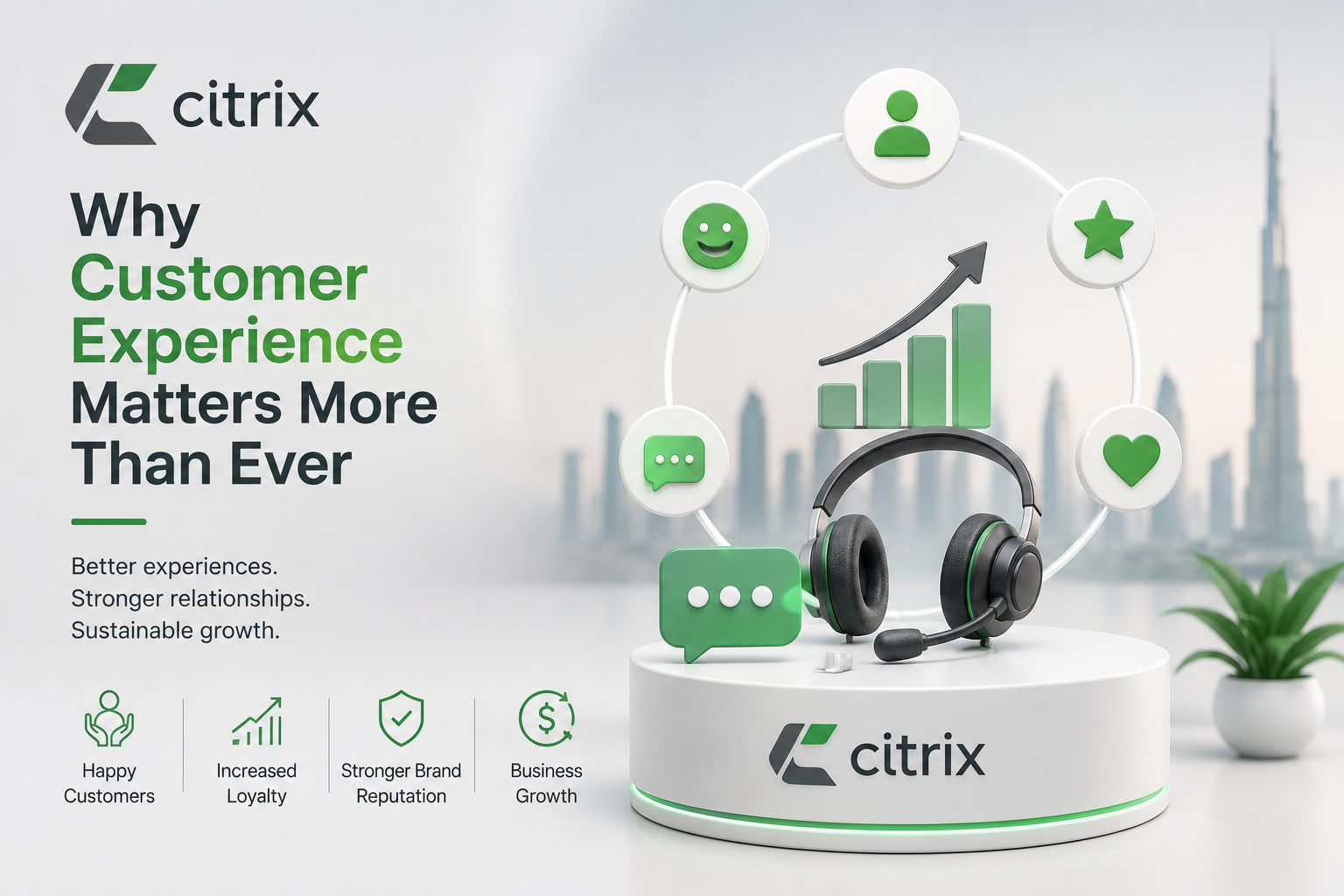
Discover why customer experience has become a critical competitive advantage for businesses and how it drives growth, loyalty, and long-term success.
Why Customer Experience Matters More Than Ever
In today’s highly competitive business environment, products and services alone are no longer enough to differentiate a company from its competitors. Customers now expect seamless interactions, personalized service, and consistent support across every touchpoint.
As a result, customer experience has become one of the most important factors influencing business success. Organizations that prioritize customer satisfaction and engagement are more likely to build loyalty, strengthen their reputation, and achieve sustainable growth.
For businesses across the UAE and beyond, delivering exceptional customer experiences is no longer optional—it’s a strategic necessity.
What Is Customer Experience?
Customer experience (CX) refers to the overall perception a customer has of a company based on every interaction throughout the customer journey.
These interactions may include:
- Visiting a website
- Speaking with customer support
- Using a product or service
- Making a purchase
- Receiving post-sale assistance
- Engaging through social media channels
Every touchpoint contributes to how customers feel about a business and whether they choose to return in the future.
Why Customer Experience Is More Important Than Ever
Today’s customers have more choices than ever before. With access to online reviews, social media feedback, and competing providers, customers can quickly switch to another company if their expectations are not met.
Businesses that invest in customer experience gain significant advantages, including:
- Increased customer loyalty
- Higher customer retention rates
- Stronger brand reputation
- Increased revenue opportunities
- Greater customer advocacy
- Competitive differentiation
Customer experience is often the deciding factor between a business that thrives and one that struggles to retain customers.
Customer Expectations Have Changed
Digital technology has transformed how customers interact with businesses.
Modern consumers expect:
Fast Responses
Customers want quick answers to inquiries, complaints, and support requests. Long wait times can lead to frustration and lost business opportunities.
Personalized Interactions
People appreciate businesses that understand their preferences and provide relevant recommendations or solutions.
Consistent Experiences
Whether customers engage through a website, phone call, mobile app, email, or social media platform, they expect a seamless and consistent experience.
Convenience
Customers value simple processes, easy navigation, and hassle-free interactions.
Businesses that meet these expectations are more likely to earn trust and long-term loyalty.
Customer Experience Drives Business Growth
Exceptional customer experiences contribute directly to business growth.
Satisfied customers are more likely to:
- Make repeat purchases
- Recommend a business to others
- Leave positive reviews
- Spend more over time
- Remain loyal despite competitive alternatives
Word-of-mouth referrals and customer recommendations continue to be powerful drivers of business success.
When customers have positive experiences, they become valuable advocates for a brand.
The Link Between Customer Experience and Customer Loyalty
Customer loyalty is built through consistent positive interactions.
A single great experience may attract a customer, but ongoing excellent service encourages long-term relationships.
Businesses that prioritize customer experience often benefit from:
- Higher retention rates
- Reduced customer acquisition costs
- Increased customer lifetime value
- Stronger customer relationships
Retaining existing customers is often more cost-effective than continuously acquiring new ones.
How Technology Enhances Customer Experience
Technology plays a crucial role in helping businesses deliver superior customer experiences.
Modern solutions enable organizations to better understand customer needs and respond more efficiently.
Examples include:
Customer Relationship Management (CRM) Systems
CRM platforms help businesses track customer interactions, preferences, and communication history.
Contact Center Solutions
Modern contact centers support voice, email, live chat, messaging apps, and social media interactions from a centralized platform.
Artificial Intelligence (AI)
AI-powered tools can provide instant responses, automate routine inquiries, and improve service efficiency.
Data Analytics
Analytics help businesses identify customer trends, preferences, and opportunities for improvement.
Technology allows organizations to provide faster, smarter, and more personalized experiences.
The Role of Contact Centers in Customer Experience
Contact centers are often the primary point of communication between businesses and customers.
A well-managed contact center can significantly enhance customer satisfaction by providing:
- Fast issue resolution
- Personalized support
- Multi-channel communication
- Consistent service quality
- Proactive customer engagement
Modern cloud-based contact center solutions allow businesses to support customers efficiently while improving operational performance.
Common Customer Experience Challenges
Many businesses face obstacles when trying to improve customer experience.
Common challenges include:
Slow Response Times
Delays in communication can frustrate customers and reduce satisfaction.
Lack of Personalization
Generic interactions often fail to meet customer expectations.
Inconsistent Service
Different experiences across departments or channels can create confusion and dissatisfaction.
Limited Customer Insights
Without accurate data, businesses may struggle to understand customer needs and preferences.
Addressing these challenges can significantly improve overall customer satisfaction.
Best Practices for Improving Customer Experience
Organizations can strengthen customer experience by focusing on several key areas.
Listen to Customer Feedback
Regularly collecting customer feedback helps identify opportunities for improvement.
Train Employees
Employees should be equipped with the skills and knowledge needed to provide excellent service.
Invest in Technology
Modern tools can streamline processes and enhance customer interactions.
Simplify Customer Journeys
Removing unnecessary complexity improves convenience and satisfaction.
Measure Performance
Tracking customer experience metrics helps businesses monitor progress and make informed decisions.
Continuous improvement is essential for long-term success.
Customer Experience as a Competitive Advantage
Products and pricing can often be matched by competitors. Customer experience, however, is much more difficult to replicate.
Businesses that consistently deliver exceptional experiences create stronger emotional connections with customers and establish lasting competitive advantages.
Organizations that focus on customer-centric strategies are better positioned to adapt to changing market conditions and evolving customer expectations.
The Future of Customer Experience in the UAE
As digital transformation continues across the UAE, customer experience will become even more important.
Businesses are increasingly adopting:
- Artificial intelligence
- Omnichannel communication
- Automation technologies
- Advanced analytics
- Cloud-based contact center solutions
These innovations will enable organizations to provide more efficient, personalized, and seamless customer experiences.
Companies that embrace these technologies while maintaining a customer-first mindset will be well-positioned for future success.
Conclusion
Customer experience has become one of the most valuable assets a business can develop. In an increasingly competitive marketplace, delivering exceptional service and creating positive customer interactions can drive loyalty, improve retention, and support long-term growth.
For businesses in the UAE, investing in customer experience is not simply about meeting expectations—it is about creating meaningful relationships that lead to sustainable success.
Organizations that prioritize customer satisfaction today will be better prepared to thrive in tomorrow’s customer-driven economy.
